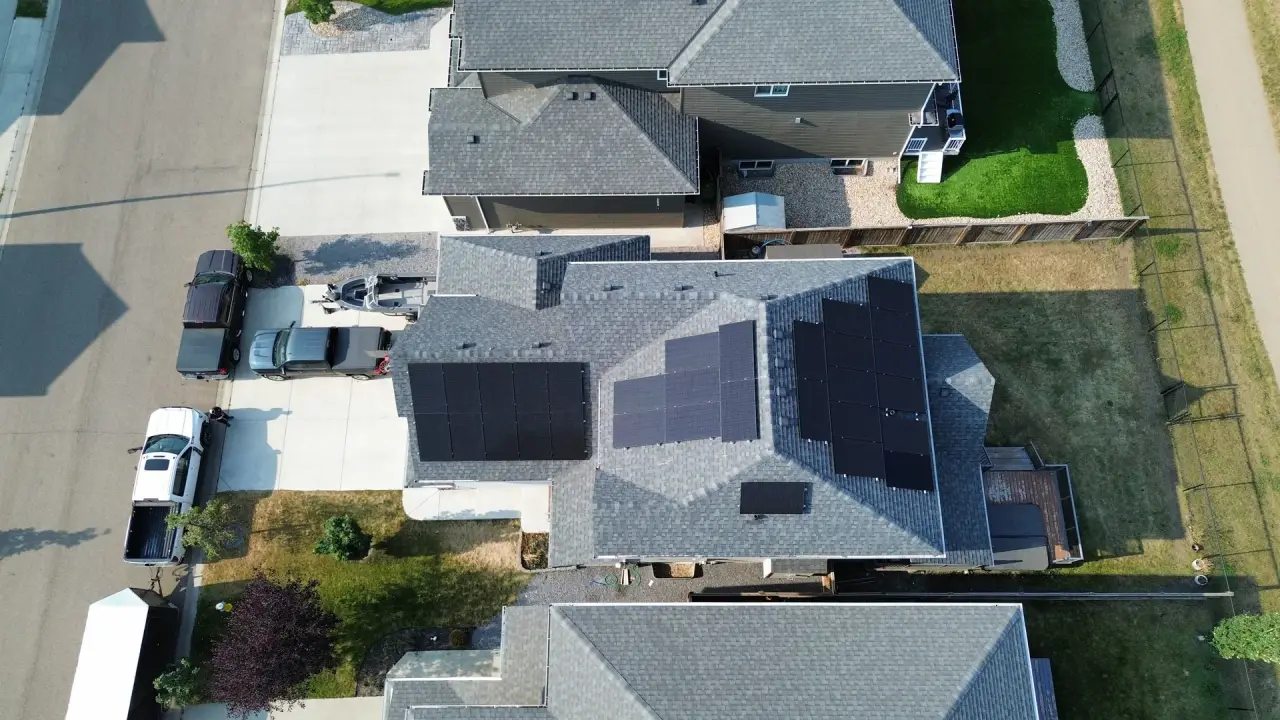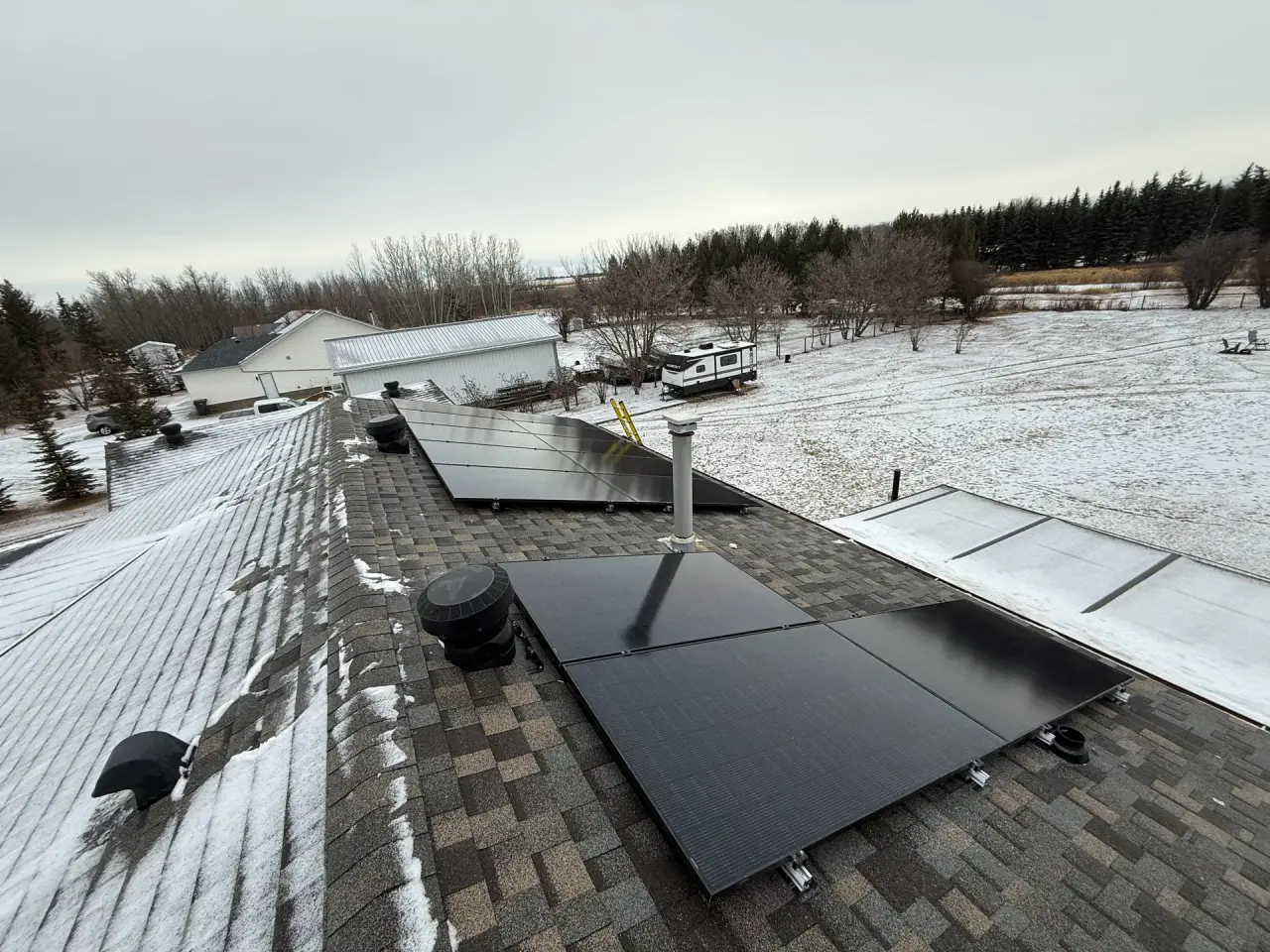
It is the single most common question we hear from Edmonton homeowners considering solar: "What happens in winter?" And it is a fair question. When temperatures drop to -30°C and daylight shrinks to under eight hours, the idea of generating electricity from the sun can seem unrealistic. But the reality is more encouraging than most people expect. Solar panels not only work in Edmonton winters, they actually work more efficiently in cold temperatures than they do on a scorching summer day.
Cold Temperatures Improve Panel Efficiency
This is the part that surprises nearly everyone. Solar panels are semiconductor devices, and like all electronics, they perform better when they are cool. Every solar panel comes with a rated power output measured under Standard Test Conditions (STC), which assume a cell temperature of 25°C. When the cell temperature rises above that threshold (which happens easily on a hot July afternoon), efficiency drops. Most panels lose about 0.3% to 0.4% of their rated output for every degree above 25°C.
Now flip that around. On a clear January day in Edmonton when the air temperature is -20°C, the panel cells might be sitting around -10°C to -15°C. That is 35 to 40 degrees below the STC rating, which translates to a meaningful efficiency gain. In practical terms, a panel rated at 400 watts can produce 420 to 430 watts on a cold, sunny winter day. You are getting more power per hour of sunlight than you would in July.
So What Is the Catch?
The catch is not temperature. It is daylight. Edmonton sits at roughly 53.5° north latitude, and the swing in day length across the year is dramatic. In late June, the city gets over 17 hours of daylight. In late December, that drops to about 7 hours and 27 minutes. Fewer hours of sunlight means fewer kilowatt-hours produced, no matter how efficient the panels are during those hours.
On top of that, the sun stays low on the horizon in winter, reducing the intensity of light that reaches your panels. The combination of shorter days and lower sun angles means winter months produce significantly less energy than summer months. For a typical Edmonton solar installation, the breakdown looks roughly like this:
- April through September accounts for about 70% to 80% of total annual production
- October through March accounts for about 20% to 30% of total annual production
- December and January are the lowest-producing months, contributing roughly 3% to 5% of the annual total combined
Those numbers look lopsided, and they are. But that does not mean your system fails to deliver value in winter. It means the system needs to be designed with the full year in mind.
What About Snow on the Panels?
Snow Sheds Faster Than You Think
Solar panels are installed at an angle (typically 30 to 45 degrees on Edmonton rooftops), and the glass surface is smooth and slightly hydrophobic. When the sun hits snow-covered panels, even weak winter sunlight, the dark cells underneath begin to warm the glass surface. Snow slides off in sheets, often within hours of the sun coming out. On south-facing roofs, panels typically clear themselves within a day or two after a snowfall.
Should You Clear Snow Off Your Panels?
In most cases, no. Climbing onto a snow-covered roof is dangerous, and the marginal energy you would recover is not worth the risk or effort. The panels are designed to handle snow loads (most are rated for 5,400 Pa or more, well beyond Edmonton's snow load requirements). A heavy snowfall might block production for a day or two, but once it slides off, the panels are back to full output. Over the course of a winter, the total production lost to snow cover is relatively small, typically 2% to 5% of annual output.
Net Metering Makes Winter Manageable
Alberta's net metering program is the key piece that makes solar work as a year-round investment despite the seasonal imbalance. Here is how it works: during the long summer days, your system will produce significantly more electricity than your home uses. That surplus gets exported to the grid, and your utility credits your account for every kilowatt-hour you send out.
Those credits accumulate through April, May, June, July, and August, building up a bank of energy credits. When winter arrives and your panels produce less than you consume, you draw from the grid and those banked credits offset your bills. Think of it like a savings account: you deposit heavily in summer and withdraw gradually through winter.
For a properly sized system, the math works out cleanly over 12 months. You overproduce in summer, underproduce in winter, and the credits balance it out so your net annual electricity cost lands at or near zero.
Real Edmonton Installations Tell the Story
We do not have to speculate about winter performance. We have years of production data from installations across Edmonton and the surrounding area.
A 4.7 kW system we installed in Windermere achieved 105% offset over its first full year, meaning it produced 5% more electricity than the home consumed annually. Did that home draw from the grid in December? Absolutely. But the summer surplus more than covered it.
A larger 7.29 kW system in Keswick hit 110% offset. Even with Edmonton's winters, the homeowner ended the year with excess credits on their account. These are not cherry-picked results. A well-designed system on a south-facing roof with minimal shading will routinely achieve 100% or greater annual offset in Edmonton.
What Production Looks Like Month by Month
For a typical 8 kW residential system in Edmonton, here is a rough monthly production profile:
- June/July: 1,100 to 1,300 kWh per month (peak production)
- April/May and August/September: 800 to 1,100 kWh per month
- March and October: 400 to 650 kWh per month
- November and February: 150 to 300 kWh per month
- December and January: 50 to 150 kWh per month
The annual total for that 8 kW system comes out to roughly 9,500 to 10,500 kWh, which is enough to fully offset the electricity usage of most Edmonton homes.
Edmonton Gets More Sun Than You Think
Edmonton averages around 2,345 hours of sunshine per year and approximately 325 sunny or partly sunny days. That is more annual sunshine than Berlin (1,626 hours), London (1,633 hours), or Munich (1,769 hours), all cities where solar energy is widely adopted and successful. Germany alone has over 2.5 million residential solar installations, and their sunniest city gets less annual sun than Edmonton.
Alberta also benefits from dry, cold air in winter. Overcast, humid conditions reduce solar production more than cold, clear conditions. Edmonton's relatively low humidity and frequent clear winter skies mean that when the sun is out, even for a short winter day, panels produce at high efficiency.
The Bottom Line on Winter Performance
Solar panels absolutely work in Edmonton winters. They work more efficiently per hour of sunlight than in summer. The limitation is simply fewer daylight hours and lower sun angles, which is a predictable, well-understood factor that every reputable installer accounts for when designing your system. Net metering smooths out the seasonal variation so your annual savings stay on track.
The homeowners who install solar in Edmonton are not ignoring winter. They are planning around it, and the results consistently show that a properly designed system delivers a full return on investment regardless of how cold it gets outside.