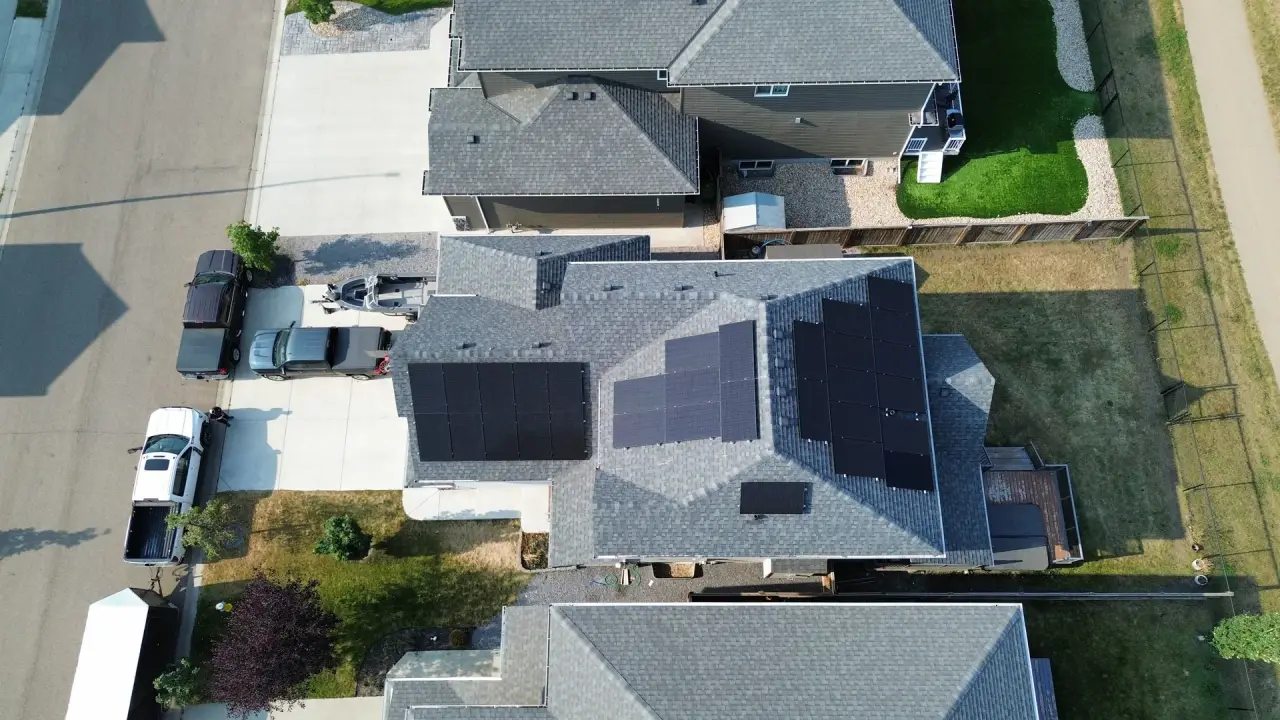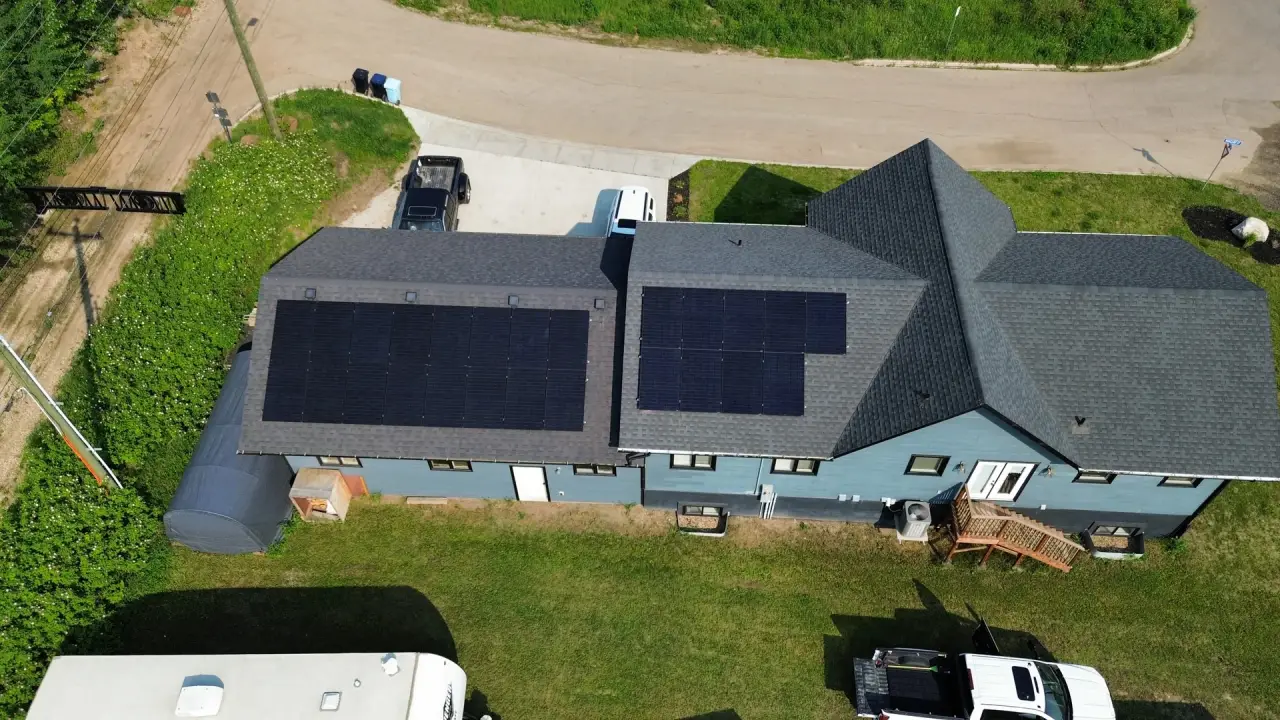
It is the single most common question we hear from Edmonton homeowners: does this city actually get enough sun to make solar panels worthwhile? The short answer is yes, and it is not even close. Edmonton is one of the best cities in Canada for solar energy production, and the numbers back that up convincingly.
Edmonton's Sunshine by the Numbers
Edmonton averages over 2,300 hours of sunshine per year, according to Environment and Climate Change Canada. That places it among the sunniest cities in the country. To put that in perspective, here is how Edmonton stacks up against other major Canadian cities:
- Edmonton: 2,345 hours of sunshine per year
- Calgary: 2,396 hours
- Toronto: 2,066 hours
- Montreal: 2,028 hours
- Vancouver: 1,938 hours
- Halifax: 1,886 hours
Edmonton receives more sunshine than Toronto, Montreal, Vancouver, and most cities in Eastern Canada. And every one of those cities has a growing solar industry with homeowners producing meaningful amounts of electricity from their rooftops.
The Germany Comparison
If sunshine hours were the only thing that mattered, Germany would be a terrible place for solar energy. The reality is the exact opposite. Germany has been one of the world's solar energy leaders for over two decades, and its major cities receive far less sunshine than Edmonton.
- Berlin: approximately 1,626 hours of sunshine per year
- Munich: approximately 1,756 hours
- Hamburg: approximately 1,557 hours
Edmonton receives roughly 40% to 50% more sunshine than most German cities, yet Germany has installed over 80 gigawatts of solar capacity. The country generates a substantial portion of its electricity from solar panels. If solar works in Hamburg with 1,557 hours of sun, it absolutely works in Edmonton with 2,345 hours.
This comparison is not just theoretical. It reflects a fundamental reality about solar panel technology: modern panels are highly effective at converting available light into electricity, even when conditions are less than perfect.
How Solar Panels Work With Different Types of Light
A common misconception is that solar panels need direct, blazing sunlight to produce electricity. They do not. Solar panels generate power from all types of daylight, including diffused light on overcast days.
Direct vs. Diffused Light
On a clear sunny day, your panels will produce at or near their rated capacity. On a cloudy day, production drops but does not stop. Modern monocrystalline panels typically produce 25% to 50% of their rated output under heavy cloud cover and 60% to 80% under light overcast conditions. Even on Edmonton's grey November and December days, your system is still generating electricity.
The Cold Weather Advantage
Here is something that surprises most people: solar panels actually perform better in cold temperatures. Like most electronics, solar cells are less efficient when they get hot. A panel rated at 400 watts under standard test conditions (25 degrees Celsius) will produce slightly less than that on a 35-degree summer day and slightly more than that on a bright, cold winter day at minus 15.
Edmonton's cold, clear winter days can produce impressive output per hour of sunlight. The hours of daylight are shorter in winter, but the per-hour efficiency is higher than what you would see in hotter climates. This partially offsets the shorter days.
Summer vs. Winter: What to Expect
Solar production in Edmonton follows a predictable seasonal pattern, and understanding it is key to setting realistic expectations.
The Summer Powerhouse Months
From May through August, Edmonton is a solar production machine. The combination of long days, high sun angles, and abundant clear weather creates ideal conditions. In June, Edmonton experiences roughly 17 hours of daylight, with the sun rising before 5:30 AM and setting after 10:00 PM. That is an enormous window for solar production.
A typical 8 kW residential system in Edmonton can produce 35 to 45 kWh per day during peak summer months. Many homeowners generate two to three times more electricity than they consume during this period, banking substantial net metering credits for the winter.
The Winter Reality
December and January are the lowest production months, with roughly 7.5 to 8 hours of daylight and lower sun angles. A system that produces 40 kWh per day in June might produce 8 to 12 kWh per day in December. Snow coverage can further reduce output temporarily, though panels are installed at an angle that encourages snow to slide off, and dark panels warm up faster than the surrounding roof.
The winter production dip is real, but it is fully accounted for when we design your system. We size installations based on annual production, not just summer output, and the net metering credit system ensures that your summer surplus carries you through the winter months.
The Annual Production Picture
When you look at the full 12-month cycle, a well-designed solar system in Edmonton produces roughly this breakdown:
- May through August: About 55% to 60% of total annual production
- March, April, September, October: About 30% to 35% of annual production
- November through February: About 8% to 12% of annual production
This seasonal curve is why properly sized systems aim for 100% to 110% annual offset. The summer surplus builds up enough credits to cover the winter deficit, resulting in a near-zero annual electricity bill.
Real Production Numbers From Local Installations
Theory is useful, but real-world results are what matter. Here are examples from actual installations we have completed in the Edmonton area:
- Bonnie Doon (5.17 kW system): 11 panels achieving 110% annual energy offset. This modest-sized system on a well-oriented roof produces more electricity than the household consumes over the course of a year.
- Keswick (7.29 kW system): 18 panels achieving 110% offset. Even with Edmonton's winter, this system banks enough summer credits to come out ahead annually.
- Devon (11.75 kW system): 25 panels on a rural acreage achieving 104% offset. Larger properties with higher consumption still reach full offset with appropriately sized systems.
- Glenora (4.23 kW system): Even this compact 9-panel system achieves 109% offset, proving that you do not need a massive array to eliminate your electricity bill.
Across all of our Edmonton-area installations, the pattern is consistent: systems designed to match household consumption reliably achieve 100% or greater annual offset.
Why Edmonton Is Actually One of Canada's Best Solar Cities
When you combine all the factors, Edmonton has a compelling solar profile that goes beyond just sunshine hours:
- 2,345 hours of annual sunshine, more than most major Canadian cities
- Cold temperatures that boost panel efficiency during daylight hours
- Extremely long summer days with up to 17 hours of usable daylight
- Dry climate with less cloud cover than coastal or Great Lakes cities
- Favourable net metering that lets you bank summer production for winter use
- Flat terrain in most neighbourhoods, minimizing shading from hills or geography
The idea that Edmonton is too far north or too cold for solar simply does not hold up against the data. Our installations consistently produce at or above projected levels, and homeowners across the city are seeing real, measurable results on their electricity bills every single month.
If Germany can build a world-leading solar industry with 40% less sunshine than Edmonton, there is no question that solar works here. The only question is how soon you want to start benefiting from it.