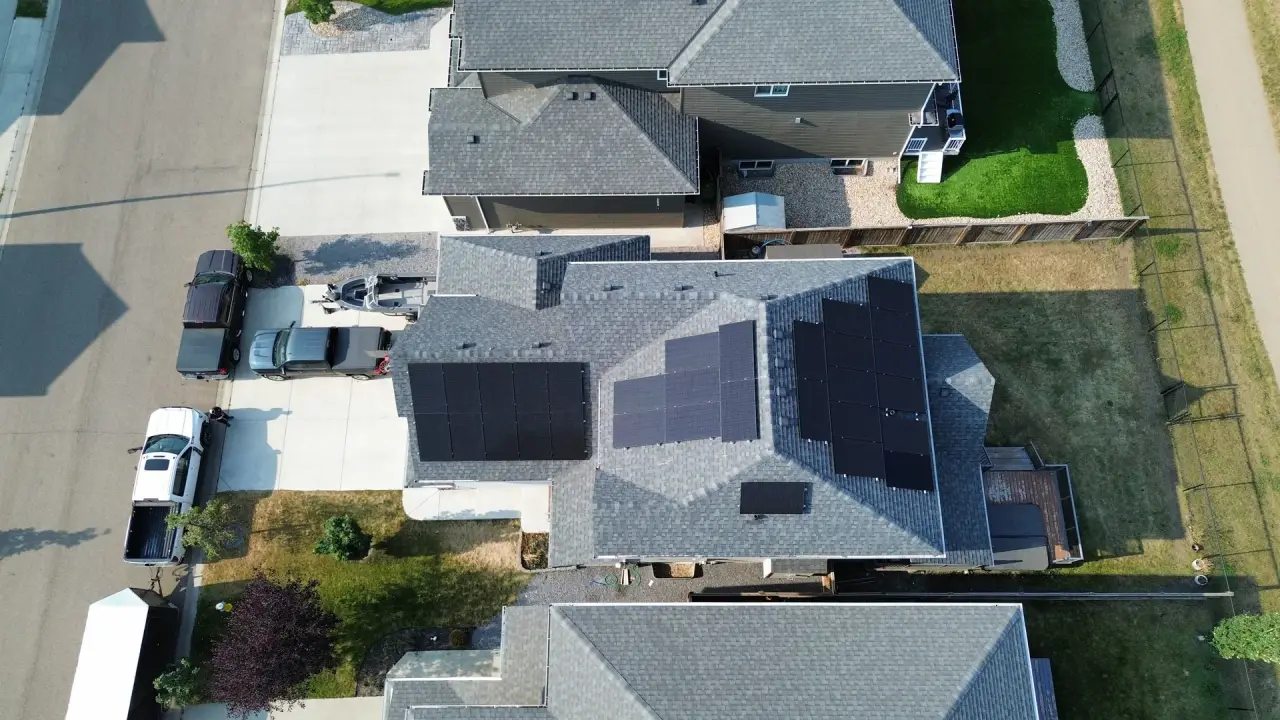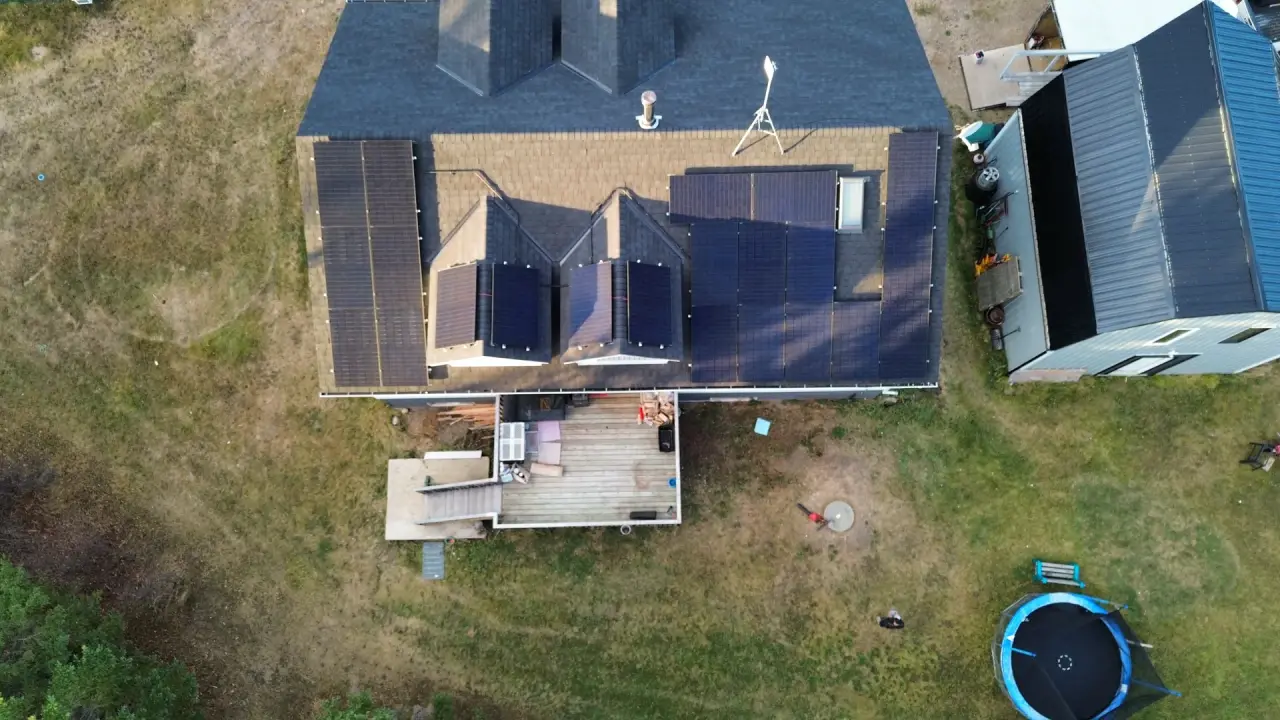
If you have been thinking about going solar, the first question on your mind is almost certainly: how much is this actually going to cost? It is a fair question, and the answer depends on a handful of factors that are specific to your home, your energy usage, and the equipment you choose. In this guide, we will walk through real numbers from actual Edmonton installations so you can get a clear picture of what to expect.
Typical System Sizes for Edmonton Homes
Most residential solar installations in the Edmonton area fall somewhere between 5 kW and 12 kW. The right size for your home depends on how much electricity you use, how much roof space is available, and whether your goal is to offset 100% of your bill or just a portion of it.
A smaller bungalow with modest energy consumption might do well with a 5 kW system using 10 to 12 panels. A larger two-storey home with higher electricity usage, electric vehicle charging, or a hot tub could need a 10 kW to 12 kW system with 20 to 25 panels. Acreage properties with shop buildings can go even bigger.
What Do Real Systems Cost?
Based on recent installations we have completed across the Edmonton region, here is what homeowners are typically paying:
- Small systems (4-6 kW): $15,000 to $22,000. These are common for energy-efficient homes, condos, or homeowners looking to offset a large portion of their bill without going all-in. Our Bonnie Doon project, for example, was an 11-panel, 5.17 kW system that achieved 110% energy offset.
- Mid-size systems (7-9 kW): $22,000 to $32,000. This is the sweet spot for many Edmonton families. A system in this range typically covers the full electricity needs of a standard household. Our Capilano installation was an 18-panel, 8.46 kW system that hit 100%+ offset.
- Larger systems (10-12+ kW): $32,000 to $40,000+. These are for larger homes or properties with higher consumption. Our Devon project was a 25-panel, 11.75 kW system for a rural acreage, delivering 104% offset.
Every installation is different, and these ranges give you a realistic starting point. When we provide a quote, the price includes panels, inverters, racking, electrical work, permits, and installation labour. There are no hidden costs.
What Factors Affect the Price?
Solar is not a one-size-fits-all product. Several variables influence the final cost of your system:
Number and Type of Panels
More panels means a larger system and a higher price. The type of panel matters too. Standard monocrystalline panels are the most common and offer a strong balance of efficiency and value. Higher-efficiency panels can produce more power per square foot, which is useful if your roof space is limited, but they cost more per watt.
Inverter Selection
The inverter converts the DC power your panels produce into the AC power your home uses. String inverters are the most affordable option and work well for roofs with consistent sun exposure. Microinverters, which attach to each individual panel, cost more but perform better on roofs with partial shading or multiple orientations. The choice between these two can shift the total cost by $1,500 to $4,000 depending on system size.
Roof Complexity
A simple south-facing roof with a moderate pitch is the easiest and least expensive to work with. If your roof has multiple angles, dormers, skylights, or steep sections, the installation takes more time and requires additional racking hardware. Tile or cedar shake roofs also require more careful installation than standard asphalt shingles.
Main Panel Upgrade (MPU)
Many older Edmonton homes have 100-amp electrical panels that need to be upgraded to 200 amps before a solar system can be connected. This is especially common in neighbourhoods like Ottewell, Bonnie Doon, and Capilano, where homes were built in the 1950s and 1960s. An MPU typically adds $2,000 to $3,500 to the project cost, but it also future-proofs your home for EV charging and other electrical upgrades.
Permitting and Interconnection
Every solar installation in Edmonton requires a city electrical permit and an interconnection agreement with your electricity distributor (EPCOR for most of Edmonton, FortisAlberta for surrounding areas). These costs are included in our quotes, but they are a real part of the total expense. The interconnection process is what allows you to feed excess power back to the grid and earn credits on your bill.
How Does 0% Financing Work?
One of the biggest misconceptions about solar is that you need a large pile of cash to get started. That is not the case. We offer 0% financing options that allow homeowners to go solar with no money down.
Here is how it works in practice: instead of paying $25,000 upfront for a mid-size system, you make monthly payments that are often comparable to, or less than, what you are currently paying for electricity. A typical financed system might cost $150 to $250 per month over 10 to 15 years. Meanwhile, your electricity bill drops to near zero, and in many cases the net monthly cost is lower than what you were paying before solar.
The math is straightforward. If your electricity bill averages $180 per month and your solar payment is $165 per month, you are saving money from day one while building equity in a system that will produce free electricity for 25 to 30 years.
Solar vs. Your Monthly Electricity Bill
Edmonton electricity rates have been climbing steadily. As of early 2025, many homeowners are paying between $150 and $300 per month depending on usage and their rate plan. Over 25 years at current rates, that adds up to $45,000 to $90,000 in electricity costs, and rates will almost certainly continue to rise.
A solar system that costs $25,000 today will produce electricity for 25 to 30 years with minimal maintenance. Once it is paid off, whether through financing or cash purchase, you are generating free electricity. The panels degrade slowly, losing roughly 0.3% to 0.5% of output per year, so a system that produces 100% of your needs in year one will still be producing around 88% to 92% in year 25.
ROI and Payback Period
The payback period for a solar system in Edmonton typically falls between 10 and 15 years, depending on system cost, electricity rates, and how much of your production you use directly versus sending back to the grid. After that break-even point, every kilowatt-hour your system produces is pure savings.
Several factors can shorten the payback period:
- Rising electricity rates. Every rate increase makes your solar production worth more.
- Net metering credits. Under Alberta's micro-generation regulation, excess power you send to the grid earns credits on your bill at the retail rate.
- Federal incentives. Programs like the Canada Greener Homes Loan provide interest-free financing up to $40,000, which reduces the effective cost of borrowing.
- Home value increase. Studies consistently show that homes with solar sell for more than comparable homes without it. A paid-off solar system is a genuine asset.
A Quick Example
Take a homeowner in south Edmonton paying $200 per month for electricity. They install a 8.5 kW system for $28,000 that offsets 100% of their usage. Using 0% financing over 15 years, their monthly payment is about $155. They save $45 per month right away. After 15 years, the payments end but the panels keep producing for another 10 to 15 years. Total savings over the life of the system can easily exceed $40,000 to $50,000.
Getting an Accurate Quote
Every home is different, and online cost calculators can only get you so far. The best way to find out what solar will cost for your specific property is to request a detailed quote. We use satellite imagery and your electricity bills to design a system that matches your roof, your usage, and your budget. The consultation is free, there is no obligation, and you will walk away with a clear understanding of the costs, savings, and timeline involved.