If you have never had solar panels installed, the process can feel like a bit of a mystery. You know the end result (panels on your roof, lower electricity bills), but what actually happens between your first phone call and the moment your system starts generating power?
This guide walks through every step of a residential solar installation in Edmonton, including realistic timelines, what our team handles, and what you will need to do along the way. Most projects go from the initial consultation to a fully operational system in about 4 to 8 weeks.
Step 1: The Initial Consultation
Everything starts with a conversation. You can call us at (780) 964-3498 or fill out the quote form on our website, and we will set up a free consultation. This typically takes 30 to 60 minutes, either over the phone, by video call, or in person at your home.
During this consultation, we review your current electricity usage. If you have a recent ATCO or EPCOR bill handy, that is helpful, but not required. We can also pull usage data from your utility account. We look at how much electricity you consume over the course of a year, including seasonal variation, since Edmonton homes tend to use more power in winter for lighting and heating-related systems.
We also discuss your goals. Some homeowners want to offset 100% of their electricity. Others are looking for a system that covers 70% to 80% and fits within a specific budget. There is no one-size-fits-all answer, and the consultation is where we figure out what makes sense for your situation.
What You Should Have Ready
- A recent electricity bill (12 months of history is ideal, but even one bill helps)
- Any questions about financing, timelines, or how solar works in Edmonton's climate
- A general sense of your budget or whether you plan to finance the system
Step 2: Site Assessment and System Design
After the consultation, we move into the technical phase. This typically takes 1 to 2 weeks and involves two main activities: evaluating your property and designing your custom system.
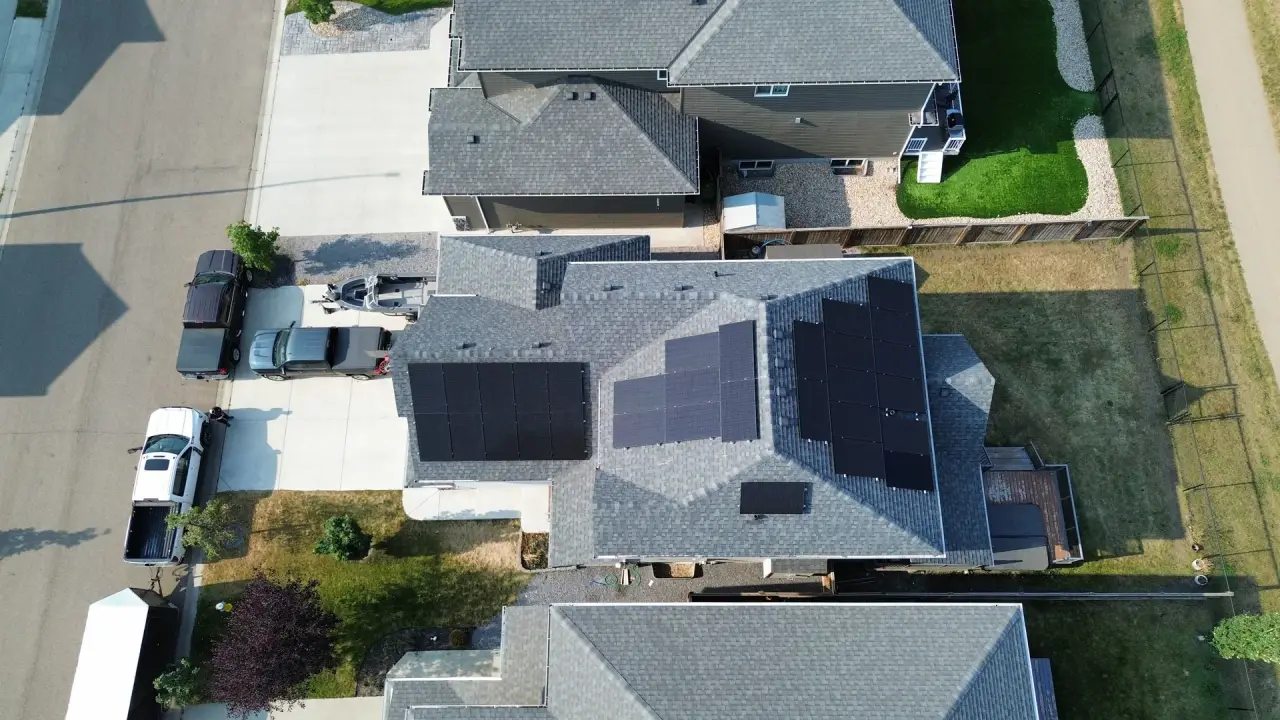
Our engineering team examines your roof using a combination of satellite imagery, drone photography, and in some cases an in-person visit. We are looking at several factors: roof orientation (south-facing is ideal, but east and west work well too), roof pitch, available space, shading from trees or neighbouring structures, and the structural condition of your roof.
Edmonton sits at about 53.5 degrees north latitude, and despite what many people assume, the city receives excellent solar resources. We average roughly 2,300 hours of sunshine per year, which is more than many major cities further south. Our long summer days are particularly productive, with up to 17 hours of daylight in June.
Based on all of this information, our engineers design a system layout that maximizes energy production for your specific roof. You will receive a detailed proposal showing the panel placement, expected annual production in kilowatt-hours, estimated electricity savings, and the total project cost with financing options.
Step 3: Permitting
Solar installations in Edmonton require permits from the City of Edmonton's Planning and Development department, as well as an electrical permit. This is standard for any work that connects to the electrical grid.
Here is the good news: our team handles the entire permitting process for you. We prepare and submit all the required documents, including structural engineering reports, electrical plans, and site drawings. You do not need to visit any city offices or fill out permit applications.
Permit approval in Edmonton typically takes 2 to 4 weeks, though timelines can vary depending on the city's current workload. During this waiting period, we order your equipment so everything is ready to go the moment permits are approved.
Step 4: Installation Day
This is the part most people are curious about, and it is often faster than they expect. A typical residential solar installation in Edmonton takes 1 to 2 days. Larger or more complex systems might extend to 3 days, but that is uncommon for standard residential projects.
What the Crew Does
On installation day, a crew of 3 to 5 trained installers arrives at your home, usually between 8:00 and 9:00 AM. Here is a rough breakdown of how the day unfolds:
- Setup and safety prep. The crew sets up ladders, scaffolding if needed, and safety equipment. All of our installers are fall-protection certified and follow WorkSafeBC and Alberta OHS standards.
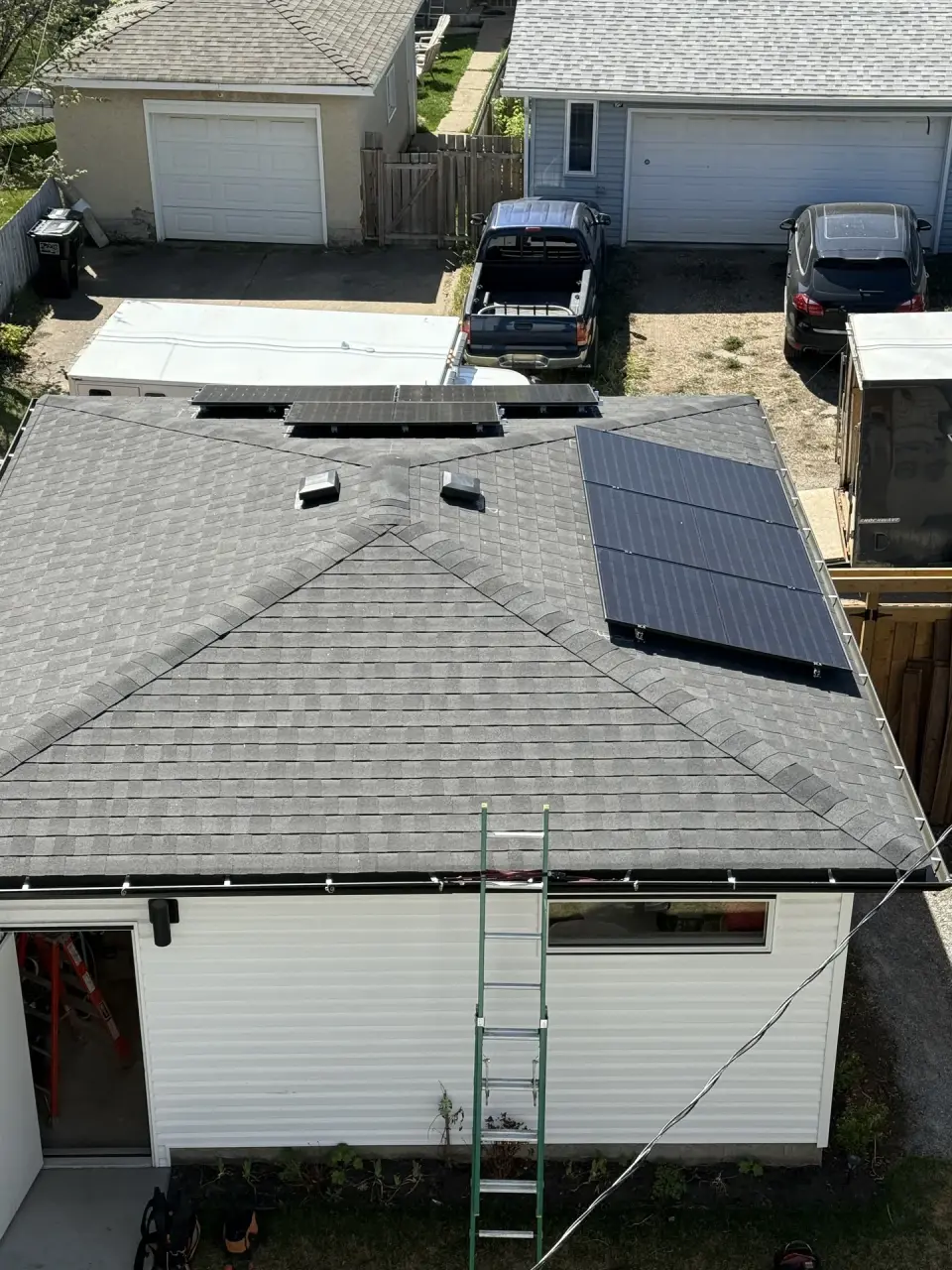
- Racking installation. The aluminum racking system is mounted to your roof. This is the framework that holds the panels. It is secured directly to the roof rafters using specialized lag bolts and flashing to ensure a watertight seal.
- Panel mounting. The solar panels are carried up and secured to the racking system. A typical residential system has 20 to 35 panels, depending on the system size and panel wattage.
- Electrical wiring. Wiring is run from the panels down to the inverter, which is typically installed on an exterior wall near your electrical panel. The inverter converts the DC power from the panels into AC power your home uses.
- System connection. The inverter is connected to your home's electrical panel. This is the point where solar power enters your home's electrical system.
- Cleanup. The crew cleans up all packaging, materials, and debris. We leave your property the way we found it.
Common Questions About Installation Day
Do I need to be home? It is helpful to be available at the start so you can meet the crew and answer any last-minute questions, but you do not need to be present for the entire installation. Many homeowners go about their normal day while the work is being done.
Will there be noise? Yes, there will be drilling and some general construction noise during the racking installation phase. It is comparable to having a new roof put on, but shorter in duration. Most of the noise happens in the first few hours. Let your neighbours know in advance if you want to be courteous.
Do I need to prepare anything? We ask that you clear any vehicles from the driveway so the crew has space for their truck and equipment. If you have pets that might be startled by noise or activity on the roof, keeping them in a quiet room is a good idea. Beyond that, there is nothing you need to do.
Will my power be turned off? There will be a brief power interruption, usually 30 to 60 minutes, when the crew connects the inverter to your electrical panel. We will let you know before this happens so you can save any work on your computer or plan accordingly.
Step 5: Electrical Inspection
After installation is complete, a licensed electrical inspector from the City of Edmonton visits your property to verify that everything has been installed correctly and meets the Canadian Electrical Code. We schedule this inspection on your behalf.
The inspection typically happens within a few days of the installation. You do not need to be present for the inspection itself, though someone should be available to provide access to the electrical panel if it is inside the home. Inspections are straightforward, and issues are extremely rare when the installation is done by experienced, licensed electricians.
Step 6: Utility Interconnection and Meter Swap
Once the inspection is passed, we submit an interconnection application to your utility provider (ATCO or EPCOR, depending on your location in Edmonton). This is the formal request to connect your solar system to the electrical grid.
The utility company will schedule a meter swap, replacing your existing meter with a bi-directional meter that tracks both the electricity you consume from the grid and the electricity your panels send back to it. In Alberta, this is how the micro-generation program works: when your panels produce more power than your home uses, the surplus flows to the grid and you receive a credit on your electricity bill.
The interconnection and meter swap process usually takes 1 to 2 weeks after the inspection is passed. Again, our team manages all of the paperwork and coordination with the utility company.
Step 7: System Activation and Monitoring
Once your new meter is installed and the utility gives the green light, your system is officially activated. This is the moment it starts generating electricity and saving you money.
We set up monitoring software that lets you track your system's performance in real time from your phone or computer. You can see how much power your panels are generating right now, how much you have produced today, this week, or this month, and how your production compares to the expected output.
Monitoring is not just a novelty. It is a practical tool that alerts you if anything is underperforming. If a panel or inverter develops an issue, the monitoring system catches it early so it can be addressed under warranty before it affects your savings.
The Full Timeline at a Glance
- Week 1: Initial consultation and proposal
- Weeks 2 to 3: Site assessment, system design, and engineering
- Weeks 3 to 6: Permitting (our team handles everything)
- Week 6 or 7: Installation (1 to 2 days for most homes)
- Week 7 or 8: Inspection, meter swap, and activation
From your first call to generating power, most Edmonton residential solar projects take between 4 and 8 weeks. The most variable piece is permitting, which depends on the city's processing times. Everything else moves quickly.
If you have been thinking about solar but were not sure what the process involves, hopefully this gives you a clear picture. There are no surprises, and our team handles the technical and administrative work so you can focus on the part that matters most: watching your electricity bills shrink.